The coast near Orizzonte Verde: from Follonica to Baratti, with salt on your skin and history under your feet

Whoever stays here does not have to choose between hills and sea.
Fortunately.

Within a fairly short drive, the whole mood shifts. The air opens up. The light becomes sharper. The scent changes from warm grass and woodland to salt, pines and sunscreen already being applied with unreasonable optimism before ten in the morning.

The coast near Orizzonte Verde is not one long stretch of interchangeable beach. It has different moods. One place feels light and easy, another darker and older, as if the land still remembers something there. That is exactly what makes it so good.

1. Follonica: the easy temptation
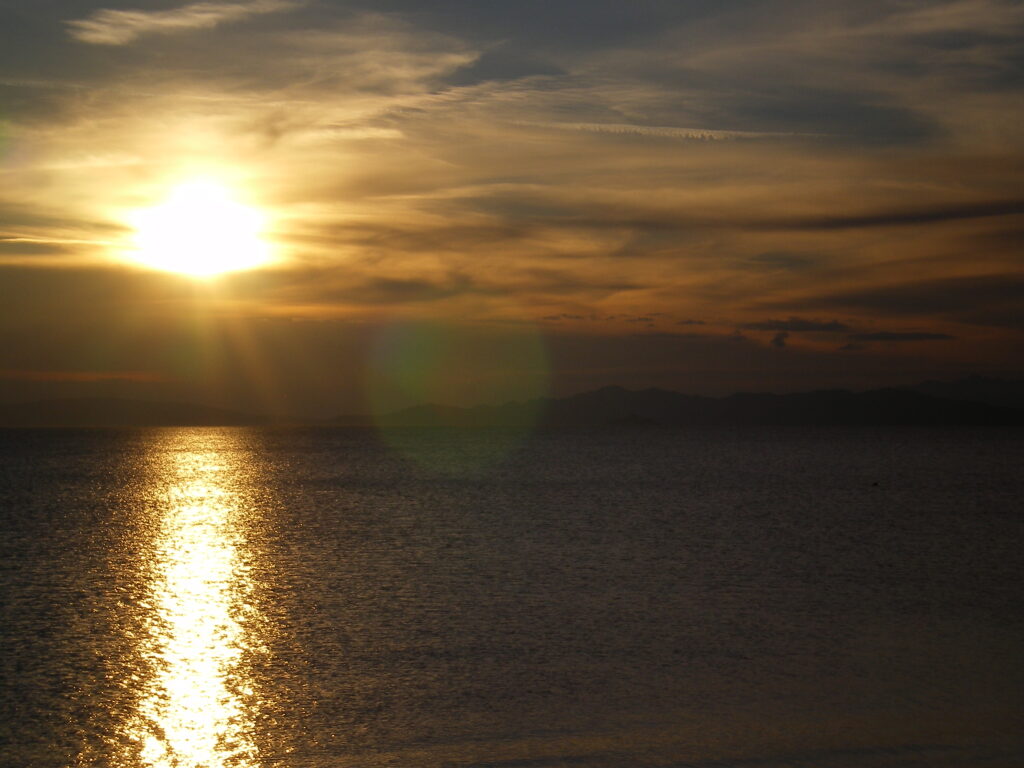
Let us be honest: sometimes you just want the sea without too much effort.

That is when Follonica is a very good idea. Wide beaches, clear water, a livelier atmosphere, ice cream in your hand before you have quite decided whether you wanted one, and that pleasant feeling of a coastal town where a beach day is allowed to be exactly that.

But Follonica is not only sun and sand. It also has an industrial past, which gives it a little more texture than a straightforward promenade town. So yes, Follonica is the easy flirt of the coast. Accessible, bright and just lively enough. Sometimes that is precisely the point.

2. Baratti and Populonia: where the coast suddenly deepens
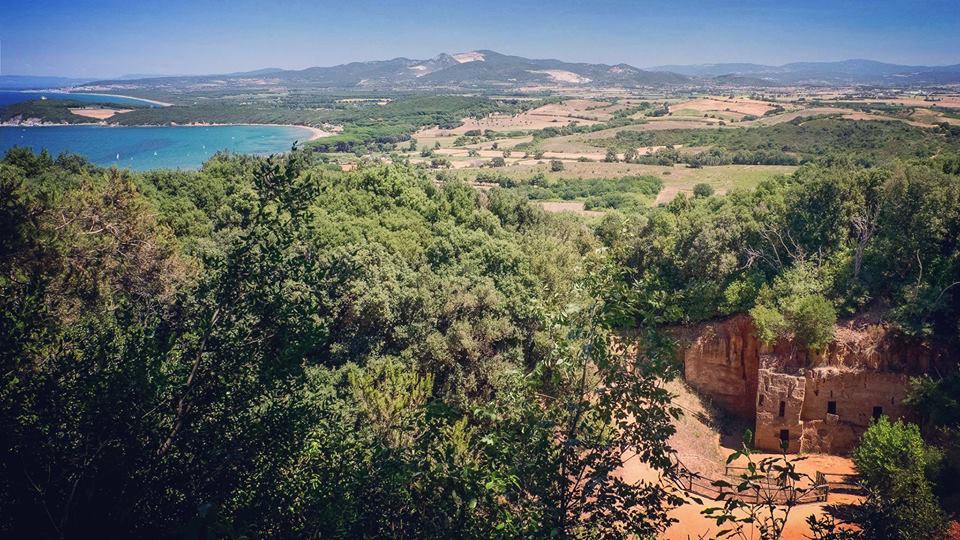
Then there is Baratti.
A bay where everything feels quieter almost at once.

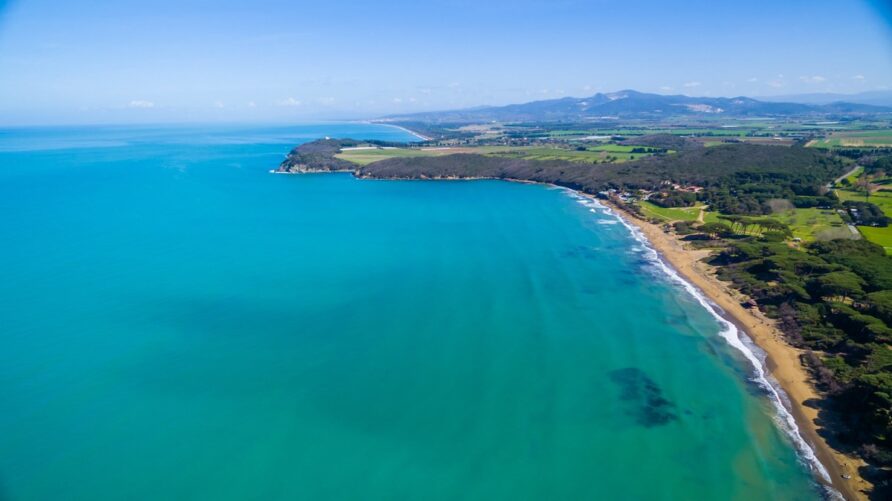
The water is beautiful, the shape of the bay almost annoyingly photogenic, but what makes this place different is not only what you see. It is also what happened here long before you arrived. Above the gulf lies Populonia, the only Etruscan city built directly on the sea, with an archaeological park full of traces of necropolises, the acropolis and old areas linked to ironworking.

And then there is the detail I love: parts of the sand in Baratti are darker because of the iron-rich history of the area. That alone already makes it more interesting than a standard beach. You are not just by the sea here. You are lying in a place shaped by fire, trade and metal.

Baratti is not just a beach day.
It is a beach day with a memory.

3. Rimigliano: for days when you want less noise and more horizon

Rimigliano is for the days when you want fewer people and more space.

No history pressing itself on you. No village hovering just above the shore. Just a protected coastal landscape of dunes, Mediterranean shrubs, pines and sea. It is the kind of place where walking, swimming, reading and doing very little suddenly feels like a complete plan.

This is the beach for readers, swimmers, walkers and people who drop their phone somewhere at the bottom of a bag and do not remember it exists until much later. Healthy, really.

4. Cala Violina: beautiful, but not for the lazy

And then there is Cala Violina.

Yes, it is beautiful. Yes, the water is clear. Yes, it is one of those places people insist on describing as “hidden”, even though by now half of Tuscany seems to know where it is. Still, beautiful remains beautiful.

Cala Violina is better thought of as a small outing than a spontaneous slippers-on-and-go beach stop. It asks a little more of you. And perhaps that is exactly why it has managed to keep a little of its charm.

Which stretch of coast suits which day?

That may be the best thing about the sea here: you can choose according to mood.
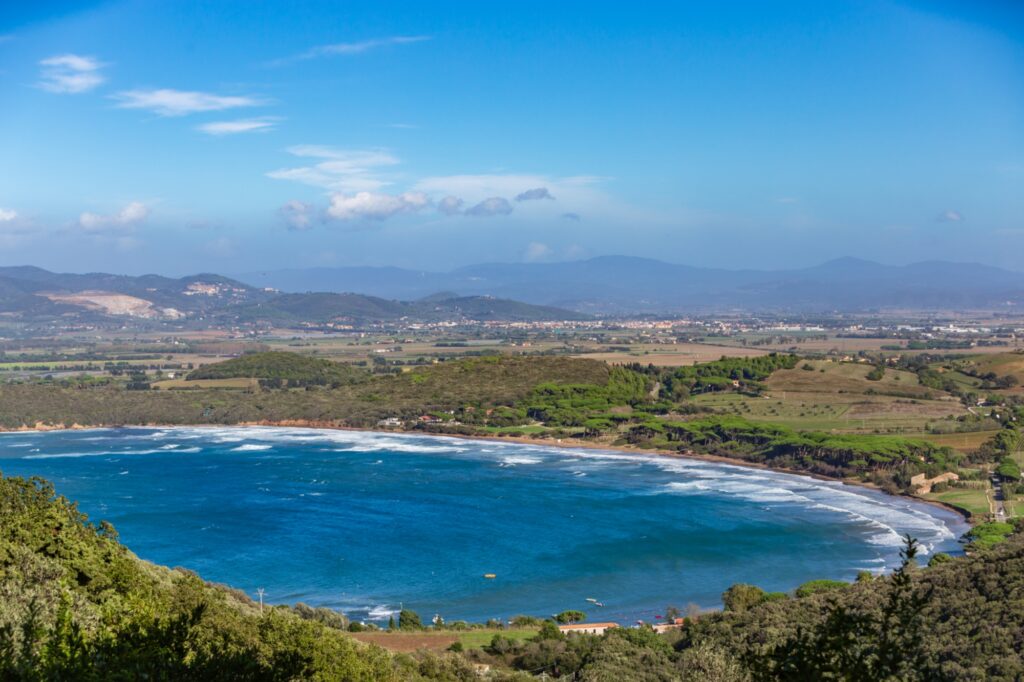
If you want something easy and livelier: Follonica.
If you want sea with history and a little drama: Baratti and Populonia.
If you want dunes, quiet and open space: Rimigliano.
If you want a wilder detour that asks something of you: Cala Violina.

That is why this coast never really becomes boring. It is not one thing. It has several faces, and that makes it more compelling than the kind of perfect postcard place that has nothing new to say after ten minutes.

Our tip

Do not try to tick everything off in one day.
It would be a waste.

Choose one place at a time and give it some room. Swim. Eat. Stay a little longer than planned. Walk back once more. Watch the light change. And somewhere between your second espresso and your first glass of wine, notice that having both hills and sea within easy reach is, frankly, rather decadent.

That part, however, is your good luck.
Montioni: where the forest quiets you and Elisa Bonaparte almost seems to be waiting around the corner

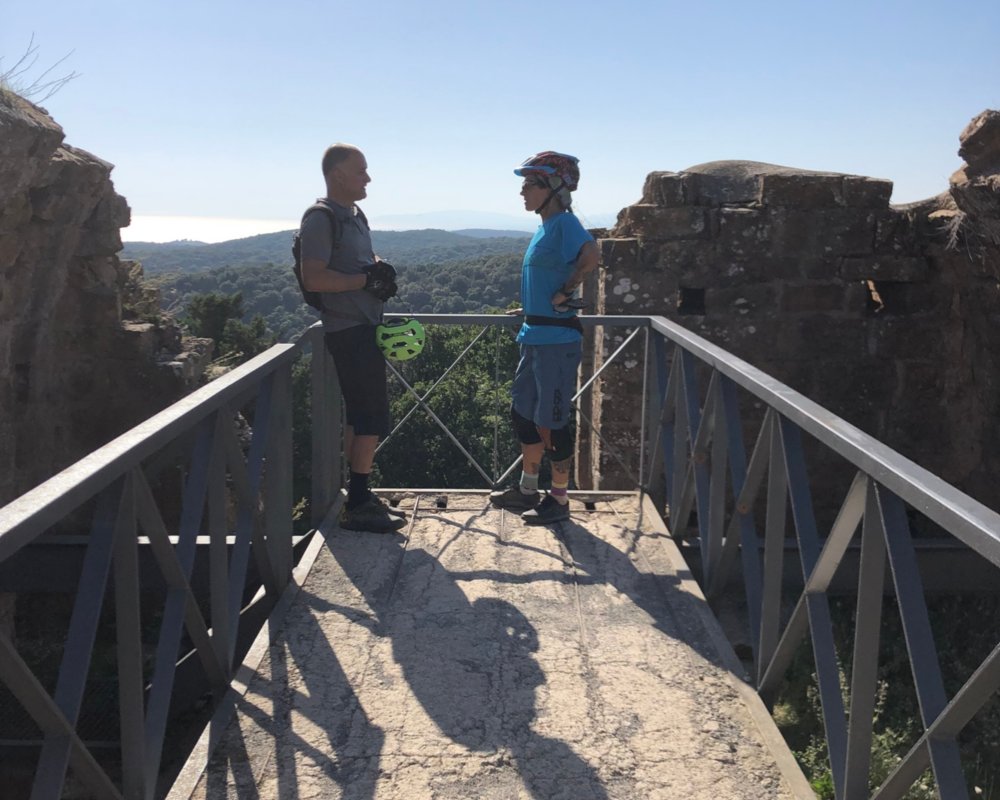
Montioni Nature Park near Suvereto begins almost on the edge of Orizzonte Verde.

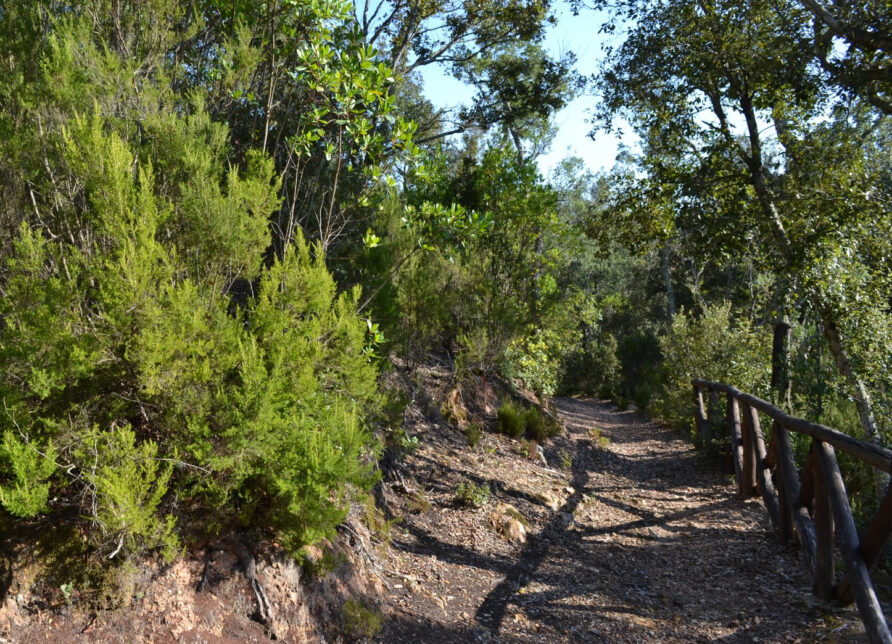
Montioni does something else. It draws you in slowly. A path, a strip of shade, the scent of warm wood and dry earth, a bend with another pocket of silence behind it. From Orizzonte Verde, you are not “some distance from a nature park.” You are right on its edge. You can feel it. It does not begin only once you have parked the car. It begins in the air, in the light, in the way everything seems to be in slightly less of a hurry.

Not long ago, I suddenly found myself face to face with a deer.
We both froze. It looked at me, I looked back, and before I could do anything sensible or romantic, it had already disappeared. As if to say: lovely that you are here, but do not flatter yourself.

That, in a way, is Montioni too.

Not a backdrop, but a landscape with memory

Whoever walks here does not only walk through woodland. You walk through a landscape that remembers.

Montioni is a large natural area between the Val di Cornia and the Val di Pecora, covering around 7,000 hectares. Official sources describe it as a place where nature and human history are constantly intertwined. Here you see not only Mediterranean vegetation and holm oaks, but also traces of alum mining, charcoal production, woodland management and old settlements.

As a writer, I find that irresistible.
A beautiful forest is pleasant enough. A beautiful forest with scars, stories, vanished labour, old routes and a hint of power politics? That is more interesting.

Elisa Bonaparte, alum and a village in the woods

And then Elisa Bonaparte suddenly appears around the corner. Not literally, although somehow that would not even feel entirely strange here. Anyone walking through the Montioni nature park near Suvereto is not only walking through woodland, but through history as well.

During the Napoleonic period, Montioni became important again because of alum mining, a mineral once used, among other things, in leather processing and in fixing dyes in textiles. Official park and regional sources refer both to the remains of that industrial past and to the Napoleonic mining village that was developed under Elisa Bonaparte Baciocchi. The park’s route information also mentions still-visible buildings, open-air mines, furnaces and entrances to underground tunnels.

That is exactly what makes Montioni so good.
It is not only beautiful. It has plot.

What you feel here

Montioni is not a neatly groomed postcard. Thankfully not.

You walk here among cork oaks, holm oaks, dry grass, strips of shade and paths that seem in no hurry to get anywhere. Sometimes the landscape opens up for a moment. Sometimes it becomes denser and quieter instead. And somewhere between the trees, those older layers are still there: mining, labour, ruins, routes, power, decline. Not like a museum set, but as remains simply left where time put them down. Official park information also refers, alongside the mining traces, to medieval and older archaeological remains, including places such as Pievaccia, Montioni Vecchio and the old baths of Montioni.

You do not have to keep “doing” things here.
Looking is already enough work.

Why we keep sending our guests here

Because Montioni shows a different kind of Tuscany.

Not only wine, villages and terraces. Also forest. Silence. Shade. A rougher rhythm. A place where you can walk without someone waving an aperol into your line of sight every three minutes. Also pleasant. Not that we are fundamentally against aperol. We simply believe in timing.

For guests of Orizzonte Verde, Montioni is not a day trip that needs to be planned with military precision. It is far more natural than that. You are already staying on the edge of this landscape. That makes a morning walk or a quiet late afternoon here feel almost obvious. And precisely for that reason, it stays with you.

Our tip

Do not go with the idea that you need to “tick off a highlight.”
Go with water, good shoes and a little time.

Let the path do something to you. Look up. Look down. Notice the scent of the forest after warmth. Stone. Bark. That one moment when you cannot hear another soul. And if, like me, you suddenly find yourself face to face with a deer, try above all to remain dignified. The animal itself will almost certainly have no interest in that, but you can always try.

Staying on the edge of Montioni

Orizzonte Verde lies on the edge of Montioni. For those who love staying in nature, but also appreciate history, depth and quiet, that is not a small detail. It is one of the reasons this place feels so special.

When you sleep here, you are not only in Tuscany.
You are on the edge of a story.

Suvereto, Tuscany: the hill town we keep returning to

There are Tuscan villages that feel made for photographs.
And then there are places that feel made for being there.

Suvereto is one of those places.

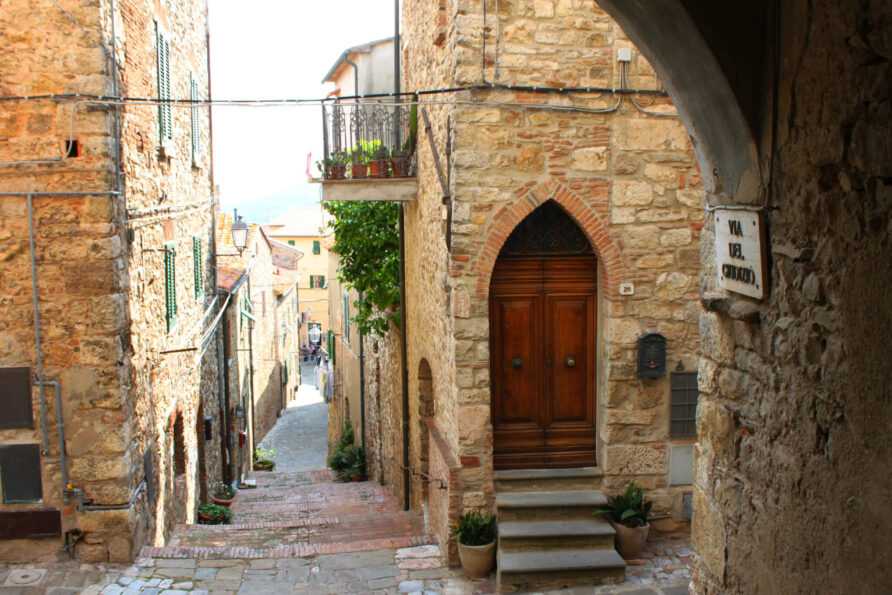
A short drive from Orizzonte Verde, this small hill town has the kind of beauty that does not need much explanation. Stone streets. Warm walls. Quiet corners. A square where people sit a little longer than they planned. A glass of local wine that easily turns into a second. It is one of the places we most enjoy recommending, not because it is dramatic, but because it feels right.

If you are staying with us and want an easy outing that gives you a real sense of this part of Tuscany, start here.

A village between hills and sea

Suvereto stands in the Val di Cornia, not far from the Etruscan Coast, with the landscape shifting gently between woods, olive groves, vineyards and Mediterranean scrub. Its historic centre is still enclosed by old walls, and the village is widely recognised as one of the most beautiful medieval towns in this part of Tuscany. It has also received the Touring Club Italiano’s Orange Flag, a mark given to small inland towns for tourism and environmental quality. (visittuscany.com) (visitsanvincenzo.it)

That all sounds impressive, and it is.
But what matters more is the feeling of the place.

Suvereto is beautiful in a way that still feels inhabited. It is not polished into something empty. There are flower boxes and old doors, but also ordinary life. People talking from one doorway to another. Laundry. A dog asleep in the shade. The pleasure of a village that has not forgotten how to be itself.

The name already tells you something

The name Suvereto comes from suvero or sughero — cork. The area was once known for its cork oaks, and even now the land around the village still carries that mix of cork, chestnut, oak and Mediterranean vegetation that gives this part of Tuscany its particular scent and texture. (visittuscany.com) (italia.it)

That matters, because Suvereto does not sit apart from the landscape.
It belongs to it.

You feel that in the approach to the village. In the road that rises gently toward it. In the way the stone, the trees and the light seem to speak the same language.

What to do in Suvereto

The best way to visit Suvereto is simply to walk.

Enter the historic centre and give up the idea of being efficient. Go uphill. Take the smaller street instead of the obvious one. Look into courtyards. Pause in little squares. You do not need to collect sights here the way you would in Florence or Siena. Suvereto is better when you let it unfold slowly.

That said, there are places worth noticing.

The Rocca Aldobrandesca, the fortress above the village, remains one of its defining landmarks. The village also has historic gates, churches and palazzi, and the old centre still carries the structure of its medieval past. (visitsanvincenzo.it) (visittuscany.com)

But honestly, one of the real pleasures is much simpler:
walking without a plan and stopping when something looks good.

A café.
A wine bar.
A shaded bench.
A shop with local olive oil or bottles you did not mean to carry home but probably will.

Wine, olive oil and the good kind of appetite

This area has a strong food-and-wine identity. Around Suvereto you find farms, olive presses and wineries, some of them very well known, and the road toward the village is closely tied to the wine culture of the region. (visittuscany.com) (visitsanvincenzo.it)

You notice that quickly once you arrive.

This is not a place for eating in a hurry.
Lunch matters here. Aperitivo matters. A bottle chosen well matters. Even a simple plate, if the ingredients are local and the room is right, can feel like part of the reason you came to Tuscany in the first place.

If you enjoy places where wine is not treated as decoration but as part of everyday life, Suvereto makes sense very quickly.

A village with its own rhythm

There are moments in the year when Suvereto becomes more lively — village events, food festivals, seasonal celebrations. One of the best-known moments is Calici di Stelle in August, when wine and summer evening atmosphere meet in the streets of the town. The area is also known for long-standing local festivals, including the wild boar festival later in the year. (en-suvereto.viatoribus.com) (italia.it)

But even outside the event calendar, Suvereto has rhythm.

Morning light on stone.
A slower afternoon.
The sound of cutlery from a restaurant terrace.
That point in the evening when the walls turn warm and people begin to stroll again.

It is not flashy. That is exactly why it stays with you.

Why we recommend it from Orizzonte Verde

What we love about Suvereto is not only the village itself, but the balance it offers.

You can spend a few quiet hours there — lunch, a walk, a glass of wine, maybe a bottle to bring back — and then return to Orizzonte Verde for the part that matters just as much: space, silence and your own pace again.

That combination feels very true to this part of Tuscany.

Not constant movement.
Not checklist tourism.
But a day with shape to it.

A slow morning at your casa.
A drive into the hills.
An afternoon in Suvereto.
An evening back in the green.

Staying near Suvereto

Orizzonte Verde is a small organic agriturismo near Suvereto, set on 26 hectares of land. It is a place for guests who want Tuscany with more space, more quiet and less noise — close to villages, wineries and the coast, but always with room to breathe.

If Suvereto sounds like your kind of place, you will probably understand Orizzonte Verde too.